
You have probably heard of “less is more” in trading, but here’s an actual explanation of what it means and how it will improve your trading.
I’m currently waiting for a payout with FTMO. Let’s break down how I got there.
More Trades vs Less Trades
Here’s a picture of my first-ever evaluation that I somehow managed to pass.
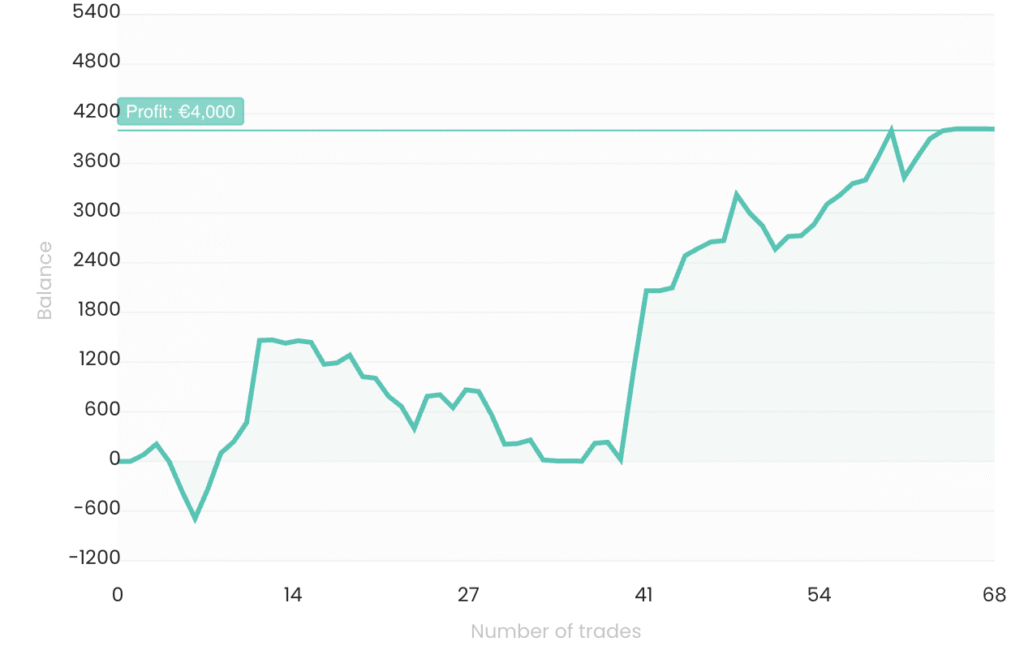
Notice the number of trades, that’s 68 trades in a total of 9 trading days. Round it up and that’s an average of 8 trades a day.
The amount of trades is a reflection of: “I have no idea what I’m looking for in the chart, but I pretend I do.”
This is my most recent evaluation, phase 2:
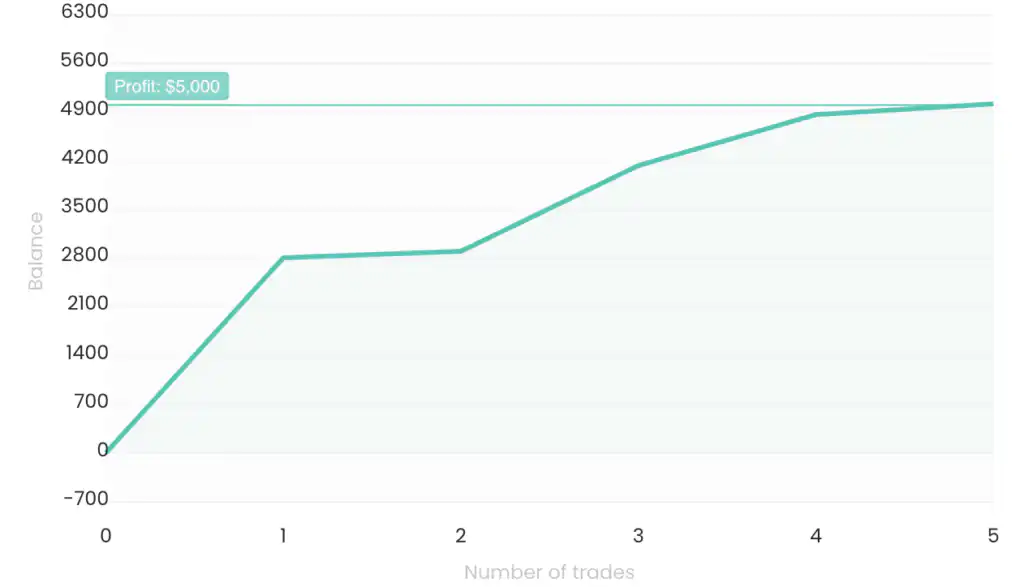
It took me 4 trades (it says 5, but 2 trades were the exact same trade, just different risk).
What’s the major difference? I know what I’m waiting for, I know what a High Probability trade actually looks like, and where they show themselves.
Increased Profit per Trade
To put this into further context, here’s how crazy of a difference the above 2 charts are:
First-ever evaluation:
- On average, it took (rounded up) 7 trades to reach 1% in profit.
Most recent evaluation:
- On average, it took (rounded up) 1 trade to reach 1% in profit.
I’m now approximately 7 times as efficient with my trading and thus also with my time. Less is truly more.
Fewer decisions to make, fewer emotions, fewer chances to overtrade or make any psychological errors.
More time, more clarity, more confidence, more profit.
Steps to Achieve This
1. Pick your poison
“Trading more = more profit” seems logical, but it’s not true. We just proved that above here.
The same way that trying to profit from a little bit of everything seems the logical best move, but it’s not.
You want to find one singular move that you can consistently be a part of, you know where to find that move, and you know how to profit from it.
This first step is more of a mindset shift than a technical one.
I can tell you from first-hand experience: trying to profit from everything leads to profiting from nothing.
2. Find your Area of Opportunity
The reason I took the evaluation was to test the Area of Opportunity. It’s a new concept, and it was developed because I was missing too many trades in my trading plan.
The reason why I missed so many trades is that I hadn’t clearly defined when and where I wanted to get involved.
That’s where the Area of Opportunity comes in. For me, that’s when we have one-sided arguments.
Yours might be a little bit different. One way to determine yours is by reviewing your past trades.
When I took those 68 trades in my first-ever evaluation, I blew the account a week after I passed it. Moving on to a new strategy, because I thought it didn’t work.
I had a gold mine in my hands and threw it away. I passed a challenge that I shouldn’t have passed, and I had a ton of data showing me what worked and what didn’t.
Not once did I look back at my data; quite frankly, I didn’t even bother journaling.
You find your Area of Opportunity by looking back at the trades you took and simply seeing what the winners and losers have in common. Is there a clear pattern there?
Speed Up The Process
You can figure everything out on your own, but it will likely take you longer.
We can help you speed up the process. All the things discussed in this email are exactly what made me start the Clarity Module in the MMT, currently rolling out.