
What is Forex Trading: Simplified Guide
October 28, 2025
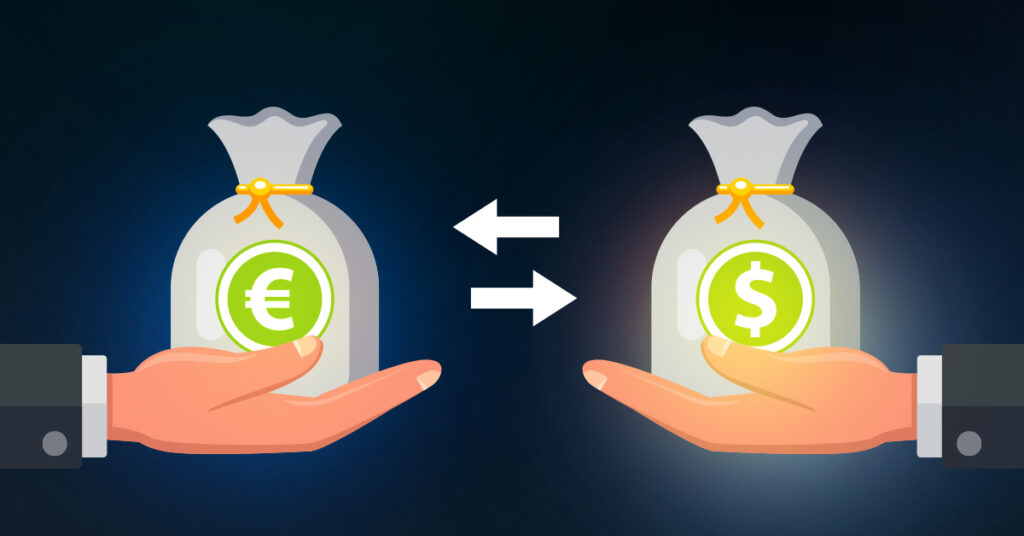
Forex trading involves buying one currency while selling another. Its popularity sees a volume amount of currencies being traded that are worth trillions of US dollars for one trading day.
This simplified guide explains what is forex trading and how people are making gains from the state of global economies.
Disclaimer: This is for education only, not financial advice. Trading involves risks where you can lose money!
Key Takeaways
- Forex is a global, decentralized 24-hour market where you buy one currency and sell another to profit from changing exchange rates.
- Turnover is enormous, about $7.5 trillion a day, so liquidity is high and price moves can be fast, which attracts day traders.
- You’ll get better results by learning pairs (majors, crosses, exotics), base-quote pricing, and lot sizes and then trading through a regulated retail broker with tight risk controls.
What is Forex Trading?
Shortened from foreign exchange, forex is the trading of currencies. The goal is to predict currency exchange rates and make money.
The FX market is a global, decentralized market, meaning no institutions or central offices control the prices. Due to the participation of individuals and various financial groups (banks, corporations, and hedge funds), prices fluctuate constantly.
Forex is decentralized. Its office does not control trades, which means the market is available 24 hours a day (across four different sessions).
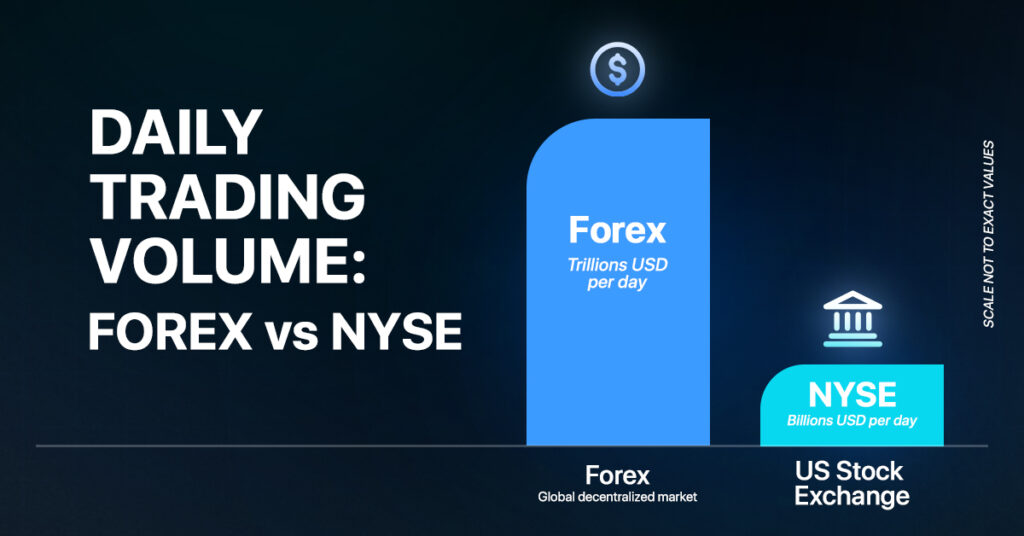
The volume exchange in the FX market should also be noted. Forex is exchanging around $7.5 trillion in just one day alone. The closest comparison is the New York Stock Exchange (NYSE), which has an average daily exchange of $20 billion. It should be noted that forex is a global market.
Currency Pairs And Quotes
Another important part of understanding what is Forex trading is to understand the currency pairs.
There are three main pairs to cover:
- Major Pairs: Nearly every Major forex pair involves the US dollar since the USD is the most recognized currency across the globe.
- Cross Pairs: Cross markets tend to involve other familiar currencies like the Euro, Japanese Yen, and UK Pound.
- Exotic Pairs: These are currency pairs involving recognized currencies, such as the USD, with emerging or less developed economies like the South African Rand or Turkish Lira.
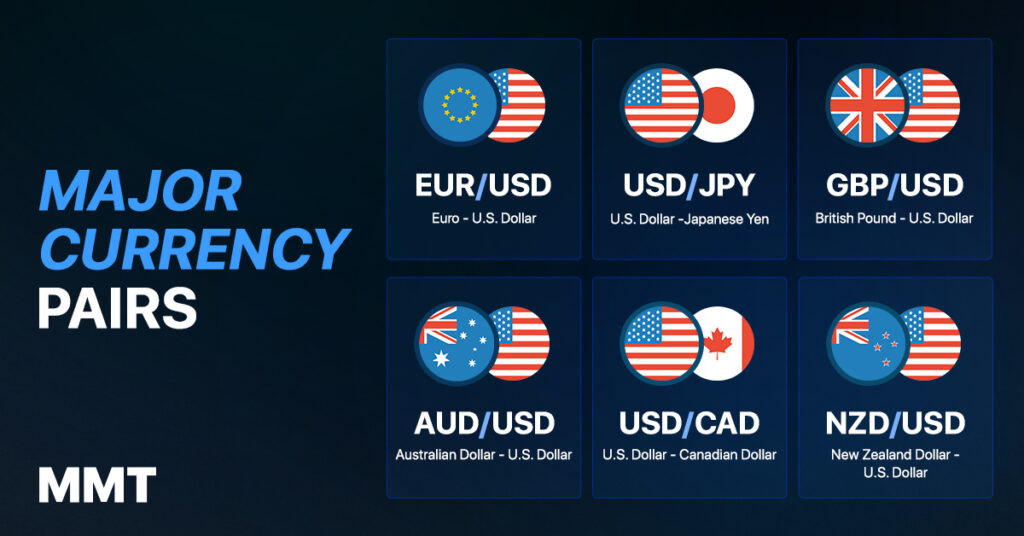
The major currency pairs traded are the following:
- EUR/USDJ: Euro and US Dollars
- USD/JPY: US Dollars and Japanese Yen
- GBP/USD: UK Pounds and US Dollars
- USD/CHF: US Dollars and Swiss Franc
- AUD/USD: Australian Dollars and US Dollars
- USD/CAD: US Dollars and Canadian Dollars
- NZD/USD: New Zealand Dollars and US Dollars
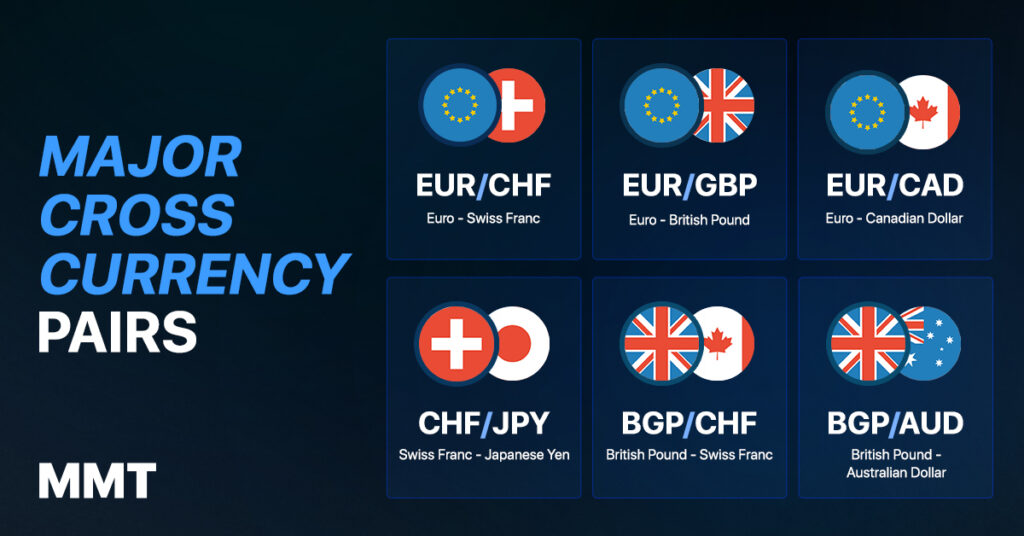
Below are examples of the cross-currency pairs:
- EUR/CHF: Euro and Swiss Franc
- EUR/GBP: Euro and UK Pound
- EUR/CAD: Euro and Canadian Dollars
- CHF/JPY: Swiss Franc and Japanese Yen
- GBP/JPY: UK Pound and Japanese Yen
- CAD/JPY: Canadian Dollar and Japanese Yen
- GBP/CHF: UK Pound and Swiss Franc
- GBP/AUD: UK Pound and Australian Dollar
- GBP/CAD: UK Pound and Canadian Dollars
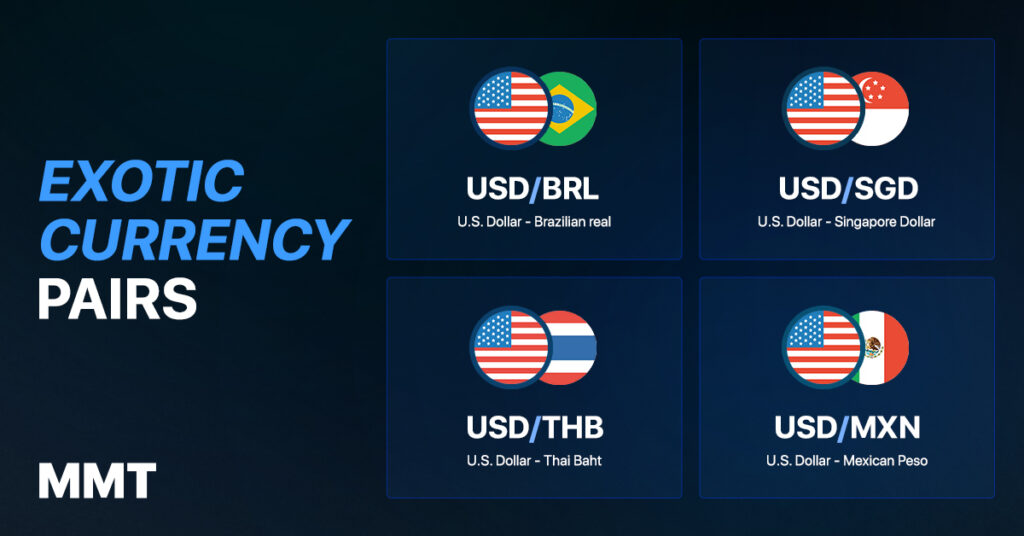
Here are examples of exotic pairs in Forex:
- USD/BRL: US Dollar and Brazil Real
- USD/SGD: US Dollars and Singapore Dollars
- USD/ZAR: US Dollar and South Africa Rand
- USD/THB: US Dollar and Thailand Baht
- USD/MXN: US Dollar and Mexican Peso
Reading the Currency Pair Value
All Forex trading involves two currencies, which is why each market would look like USD/EUR or USD/GBP. For each trade, you are simultaneously buying one currency and selling the other due to the purchase of contracts in FX. The question now would be, which currency are you buying and which one are you selling?
Let’s have USD/EUR 0.8603 as an example.
- USD – Base Currency
- EUR – Quote Currency
The base currency is what you are using to buy the quote currency. If you bought EUR with $100, you will get €86.03.
In a different example, a 0.81 price of USD/GBP is based on the USD as the base currency and the GBP as the quote currency. What about GBP/USD? It would cost $1.08 if the GBP is the base currency and the USD is the quote currency.
Bidding on an instrument with the base currency means its value increases while the quote currency depreciates. An example would be the EUR/USD.
Forex Lots and Units
An important aspect on our guide to what is Forex trading is the units and lots being traded. All traders exchange FX in lots, which contains several base currency units:
- Standard: 100,000 currency units
- Mini: 10,000 currency units
- Micro: 1,000 currency units
- Nano: 100 currency units
To help you understand how large a standard lot is traded, consider the exchange rate of EUR/USD, which is around 1.16 USD per unit. You need 116,000 units to trade a standard lot.
How are Forex Currencies Traded?
Understanding where the market takes place is part of knowing what Forex trading is. Forex is primarily an interbank market accessed by banks and financial institutions. Only representatives are present to conduct trade pairs since volume units of currencies are being exchanged, which is too much for ordinary traders.
Retail Forex is where you can trade FX units. This market is offered by providers who join the interbank market. They buy or sell units from the interbank and offer them to traders at a marked-up price. To further allow for accessibility, you can utilize leverage, margin, or other financial means to start trading.
Getting a clear grasp on what is Forex trading is a good foundation for learning advanced day trading skills. Build up on your essentials by joining MMT Beginner’s membership. For just 1 EUR, you gain lifetime access to help you learn skills in FX trading and other markets.
Types of Forex Markets
Forex offers different markets or ways of trading currencies. These are similar to the instruments covered in our day trading for beginners guide. Below are the Forex markets:
Currency Futures
This Forex market involves a futures contract in which two traders agree to buy one type of currency and sell the opposing type to each other. Contract holders must complete their order upon the expiration date agreed upon by the parties involved.
Currency futures were made by the Chicago Mercantile Exchange (CME). They are currently the largest provider of futures for a wide range of Forex and other assets, such as metals and cryptocurrencies.
Futures are a hedging option when there are concerns that a currency’s value is about to drop. Companies trade units to protect the value of their assets against FX price movements that are unfavorable to them. This is done by locking in the exchange price when the contract is made. One example is to sell USD futures for GBP. If the US dollar depreciates to the UK Pound, that company benefits from the contract.
Currency Options
Options are similar to futures, where you trade a contract that gives you the right to buy or sell currency at a specific price and date. There are two different currency options available:
- Call: This lets you purchase the currency asset at the specific strike price. Traders often take this as a long position when they feel the underlying asset’s value will increase.
- Put: This option lets you sell the currency asset at the specific strike price. Traders who believe the asset’s value will go down consider this a short position.
This Forex market option is another means of protecting against the price movement or taking advantage of one currency’s appreciation. New traders likely think this is the best possible market since you have the “choice” to go through with the transaction if the FX market is moving in favor to you. However, you are required to pay a premium when purchasing an option contract. If the price does not go your way, your loss is the amount you paid for your call or put contract.
Spot Forex
One of the most common trading instruments is the spot market, where you trade currency pairs at their current price. Transactions are immediate, with buyer and seller agreeing to exchange the asset at a specific price.
Because you trade currencies at their current price immediately, spot Forex offers a good opportunity for day traders. It lets you take advantage of short-term price movements with a low spread.
Popularity of Forex Day Trading
After understanding what is Forex trading, you should see why it is a popular market among day traders. While other assets are available for trading, many still prefer trading currency units. Below are the reasons why day traders participate in the Forex market.
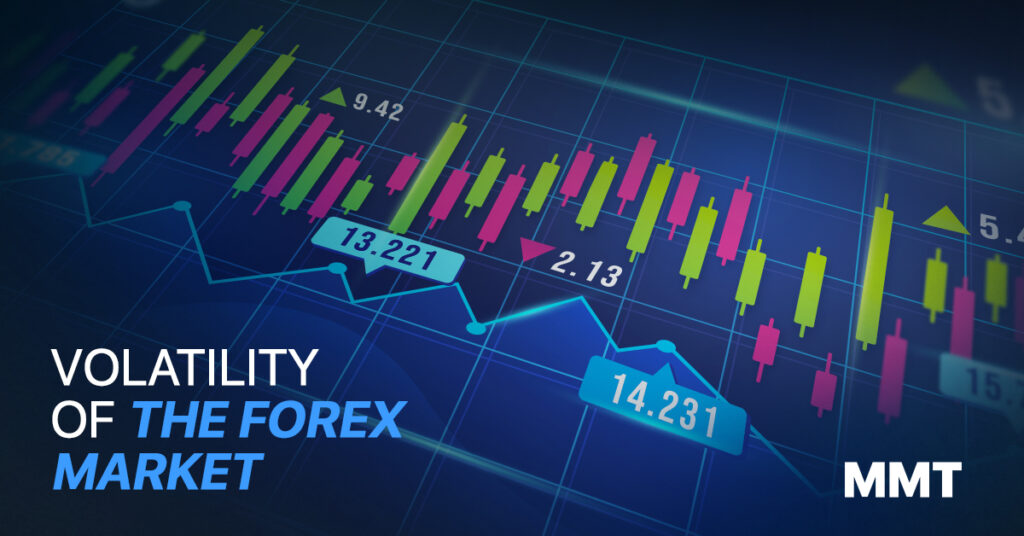
- Volatile Market: Forex often sees high participation from traders from across the globe. Currencies, including the US dollars, are affected by the state of their respective countries’ economies. Both factors result in rapid price movements that favor day traders.
- High Liquidity: Due to high trader participation, positions are highly liquid and are likely to be filled. With a highly liquid market, you can see gains within the day.
- Currency Options: Most exchanges offer major currency pairs such as the EUR/USD, while others also include crosses and exotic pairs. These options allow traders to switch between buying and selling pairs that are likely to see volatility during a specific trading period.
- Better Trading Alternative: When dollars appreciate, most stock prices see a decrease in their price. A plummeting stock value see less interest among traders willing to buy and sell shares. However, a stronger dollar often generates enthusiasm among forex traders.
The active participants in the Forex market, including the various options available, are always a good opportunity for day traders. This same advantage is also why it is difficult to make money from Forex. When the New York session opens after a breaking economic or geopolitical event, prices can surge or drop rapidly within an hour.
Final Words: Answering What is Forex Trading
Forex trading is the process of exchanging currency pairs. It is a means for companies to hedge against the depreciation of a currency when they buy or sell products outside of their domestic market. Traders take advantage of the potential price movement if political stability or an economic boost can affect the supply and demand of certain currencies. Join MMT beginner to learn the complex Forex market and gain a basic understanding of day trading for only 1 EUR today!
FAQ: Forex Trading Basics
Are there Forex fees new traders should be aware of?
When trading Forex lots, a brokerage often has fees included in every transaction on their platform. A standard fee is spread, which is the gap between the bid and ask price. A wider spread means you pay marked-up prices when buying or selling FX lots.
What are Forex commission fees?
Another way brokers charge traders is through a commission fee for every transaction. This fee is charged at a flat rate for every lot traded.
How can I tell if a Forex broker is regulated?
Review their About Us section and look for a broker’s regulatory license. You can obtain their license number and run it through the regulatory body governing the brokerage.
Which economic releases move major pairs the most?
An economic release is reports and data on a country’s financial well-being. It is announced through an economic calendar, which many day traders refer to. Pairs involving the G10 currencies are likely to move with an economic release.