
One of the biggest traps traders fall into is getting impulsive when their bullish bias doesn’t play out immediately, looking for shorts, and vice versa.
To envision this, that often leads to something like this:
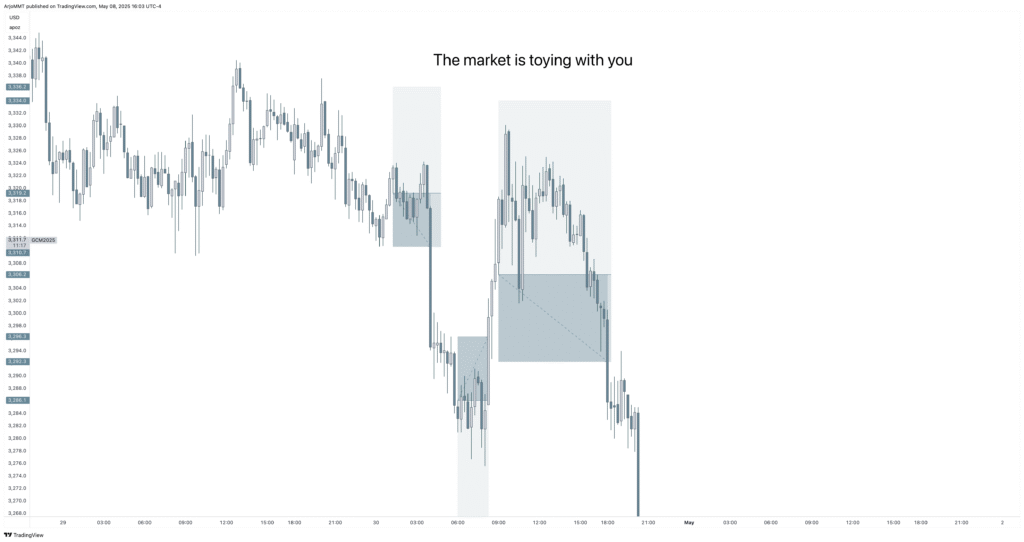
To prevent this, you don’t actually want to switch your bias from bullish to bearish; instead, go from bullish → 50/50 → bearish. Or what will happen often: bullish → 50/50 → bullish again.
You take a step back, re-evaluate, and switch or still stand with the same bias.
You take this step back when there’s an argument starting to form against your bias.
Let’s break it down:
What is a Bias?
A bias is the direction; we know that by now. But a bias is made up of arguments, and arguments are confluences. A bullish FVG is a bullish argument, as it suggests that we might want to continue higher.
You guessed it, a bullish bias consists mainly of bullish arguments.
But there will be a time when we will be bullish, and a bearish argument will start to creep into the market. When it starts doing something you didn’t expect or want.
For example, here we were bullish, but all of a sudden we started to create bearish momentum and disrespecting bullish FVG, thus creating bearish arguments.
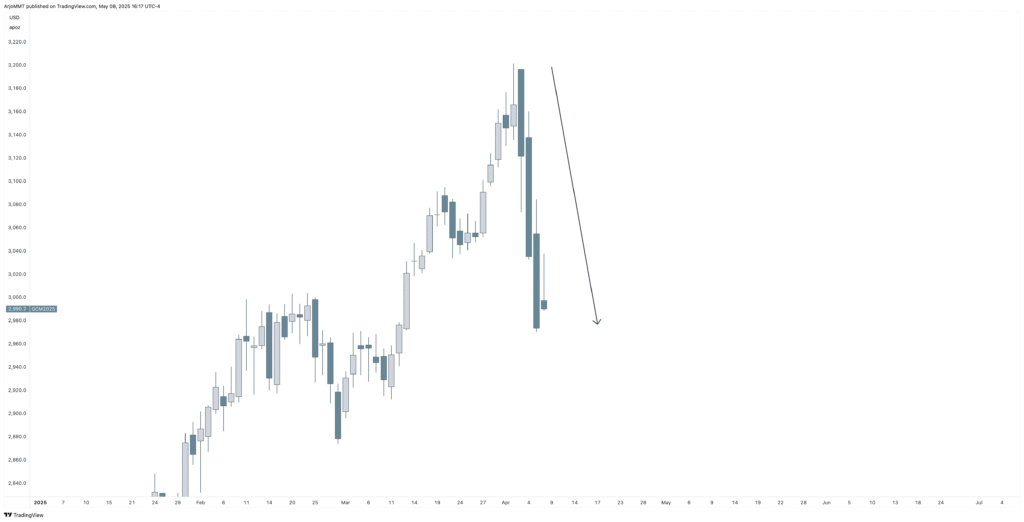
However, the majority of arguments there are still bullish; just a bearish argument entered the market, which messed with the momentum.
What do you do?
Take Away The Opposing Argument
You go from bullish → 50/50 → ?
The question mark is there because of the following:
– If we take away the bearish argument, that would mean we’re bullish again.
– Or we keep stacking up bearish arguments and taking away bullish arguments, which means we would be bearish.
We see that the bearish argument (the momentum) is taken away because the bearish Order Flow is now turning bullish again.
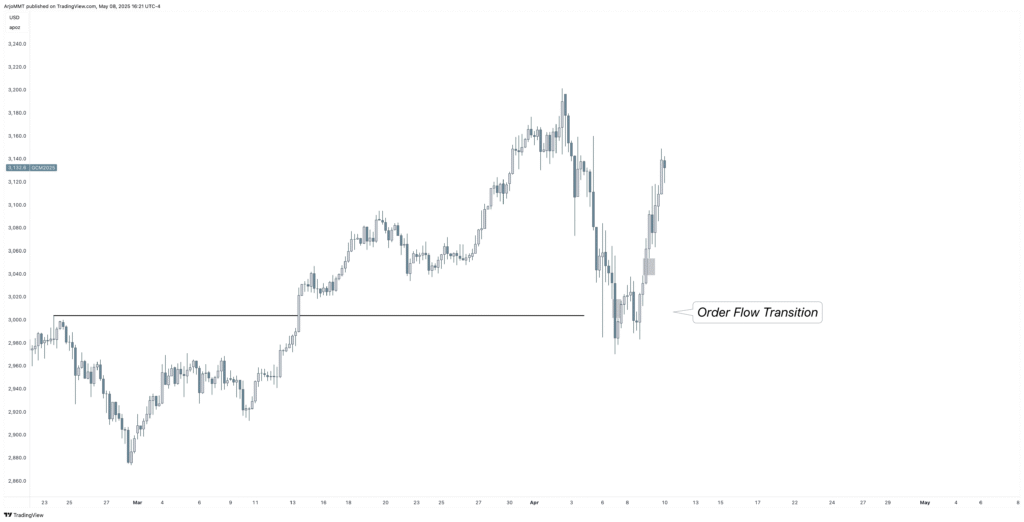
So it’s time to look for buys again.
You Need More Parameters
I saw this comment in the free Discord the other day:
“Is it possible to know what’s the gold behavior for today ? yesterday and the day before was clear, but today I’m confused . continue pullback or going for ATH, it is a pleasure to know your opinion.”
This was referring to Wednesday, the 7th of May.
Now, the beauty of this is that I also had no idea, but I did have an idea of what should happen next for me to buy again.
You don’t need to know what the market is constantly doing, or how far it can exactly retrace, or losing sleep overanalyzing about what it might be doing, or what could happen; you just need parameters. I know uncertainty is uncomfortable, but that’s trading and life.
You just need to know if it’s time to act or not, and that story is told through arguments.
Let’s see what happened that day:
The Day Gold Was Uncertain
We got a bearish argument all of a sudden. Large bearish momentum is entering the market.
Your bias: bullish → 50/50 → ?
That next day, Thursday, we can continue higher and look for buys if we disrespect the 1h FVA. If that doesn’t happen, we do nothing.
That’s the parameter: disrespect 1h bearish FVA → look for buys
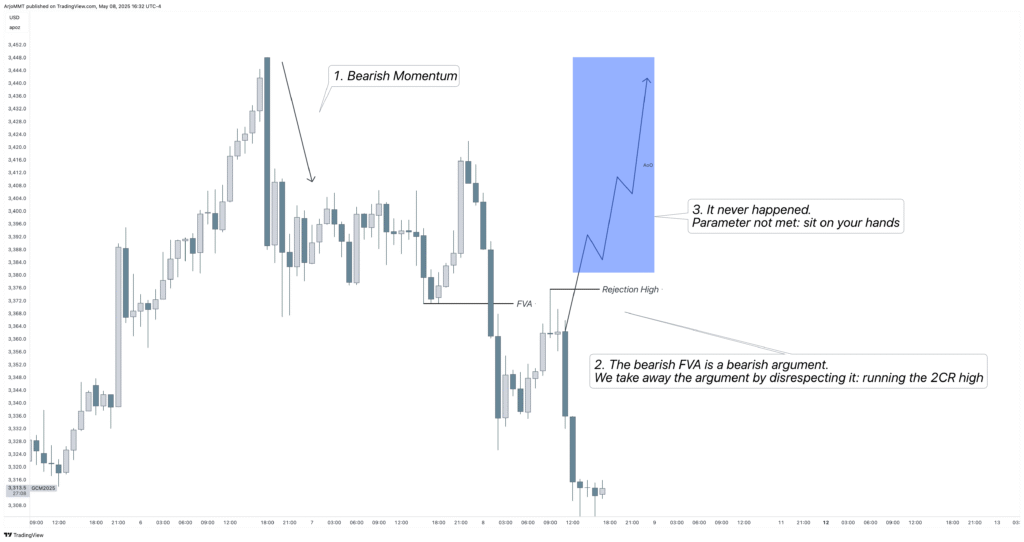
So above the high would’ve been the Area of Opportunity.
But we ended up doing nothing because the parameter was not met.
“But why not look for sells, they played out great!”
Because there are still many more bullish arguments than bearish ones, so looking for sells is against the momentum. Yes, it can play out for sure, but over a 100-trade sample size, you’re much more likely to be unprofitable trading that way.
This is Trading
This is what trading is about, the MMT can help you become a professional trader, a trader that can scale their capital to whatever they desire
How we take seemingly subjective things and make them objective, we don’t act on feelings, we act on facts.
This is why the MMT is changing the industry for good, and we’re happy you’re a part of it.
Always here if you need me!
Arjo Janssens — MMT