
Day Trading For Beginners: Start Here
October 26, 2025
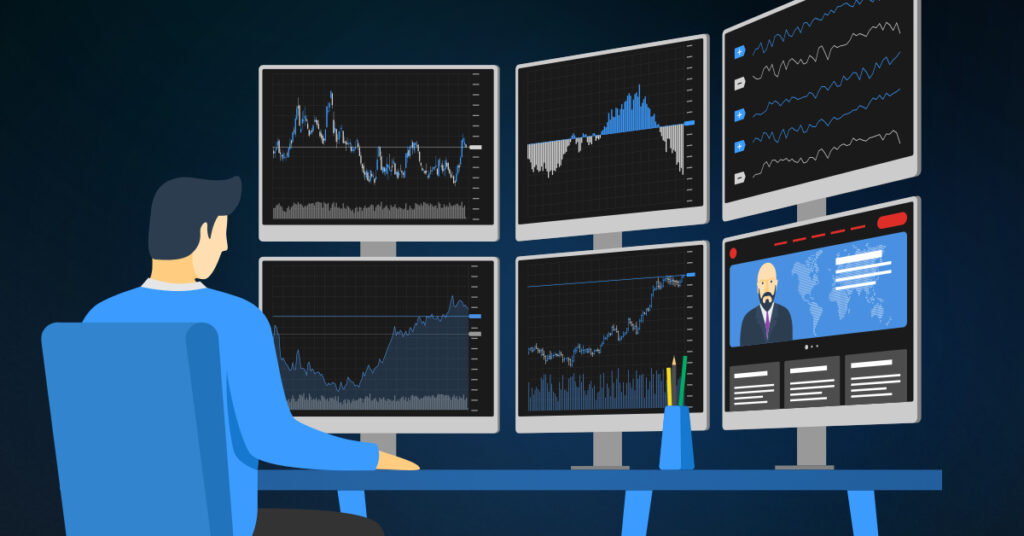
You can make money from day trading. If you are here, you likely never heard of forex, candlestick patterns, or stop-loss orders before. The term day trading could have come up from a conversation with your co-workers or from a video of an influencer talking about index strategies.
If the term seems unclear, our article on day trading for beginners is for you. We cover the basics of trading, including the assets you trade.
Disclaimer: This is for education only, not financial advice. Trading involves risks where you can lose money!
Key Takeaways
- Day trading focuses on buying and selling liquid assets within the same day. Volatility creates chances to profit, but it also increases risk.
- Profits and losses come from price changes. You can make money on rises and falls, including short positions when you borrow shares and try to repurchase them at a lower price.
- Market hours shape your approach. Many traders act near the open, while pre-market and after-hours often have less liquidity and wider spreads.
- Start with foundations before real money. Open a brokerage account to learn the platform, use a demo to practice, and keep a trade journal to track every lesson.
Understanding Day Trading for Beginners
Trading is essentially the buying and selling of liquid assets or ones that can easily be turned into cash. These assets involve stocks, options, futures, and currencies. The goal here is to profit from the price movement of these assets.
“Day” trading means buying and selling these assets within the same day. Active traders take advantage of the short-term price movement during trading hours. Volatility, or the rapid movement of the market, allows for massive money-making opportunities.
How Profits And Losses Actually Happen
One essential lesson to learn in our guide on day trading for Beginners: Profits are made by exploiting price changes. Day traders make smart predictions about market movements through careful analysis and in-depth knowledge.
If a company is about to announce its latest phone on Monday, day traders are buying that company’s stock when the market opens. Historically, renowned brands like Apple see their stocks rise drastically in value when they announce a new iPhone. If a popular company similar to Apple does the same, there is a chance that its stock prices will follow suit.
Keep in mind that stocks do not need to increase their value for day traders to profit. You can still make money even if an asset’s value plummets. This practice is done through short positions, where you borrow shares and sell them at a lower price. A good example of shorting can be seen in the movie The Big Short, which showed how Michael Burry and other investors made money from the crashing housing market.
Price movements are also the reason why day traders lose money. Should Apple stocks drop due to a controversy with their new device, or if the housing market does not collapse, day traders are likely to experience losses.
How Day Trading Differs From Investing
One common misunderstanding is the concept of day trading and investing, since both involve buying and selling assets. Investing focuses more on long-term price movements by holding positions or assets for an extended period.
The extended time period is used by investors looking for undervalued assets in the market. They believe certain assets are at their lowest price and can increase its value in the future. A good example is with Warren Buffett’s purchase of American Express and Coca-Cola Co at a time when few investors thought of buying their shares. Both of the company’s shares are worth billions in modern markets.
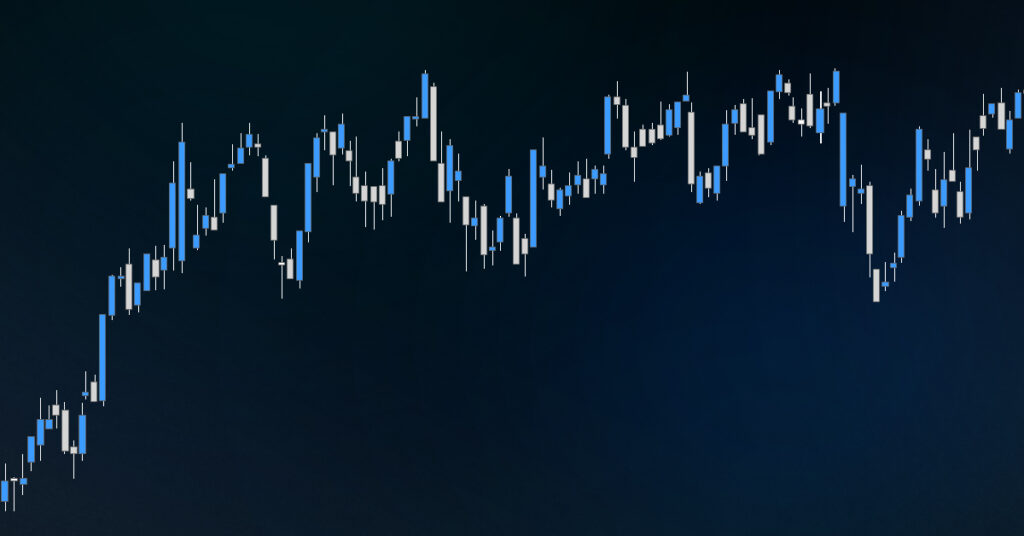
Day traders are not concerned with an asset’s potential to increase or decrease its value in the future. Volatility is the key aspect of their means to make money in the market. This involves creating plans based on careful analysis of previous market movements and other external factors that can cause the value of a stock, currency, or index to fluctuate.
Coca-Cola Co stocks are still within a day trader’s target if any significant event can affect the company. These events include a shortage in ingredients for their popular soda or another acquisition.
Market Mechanics And Hours
This section covers the “day” part of day trading. All of them are taking and exiting their position (buying and selling/selling and buying their assets) during trading hours.
Trading Sessions
Many traders participate at the start of a trading session, resulting in rapid market movements. Around 9:00 to 11:00 am, day traders are entering their positions and exiting them before the session ends.
Various asset classes have their own schedule, but all of them usually begin in the morning. Many of them follow the New York Stock Exchange working schedule.
Below is a collection of the top stock exchanges day traders participate in:
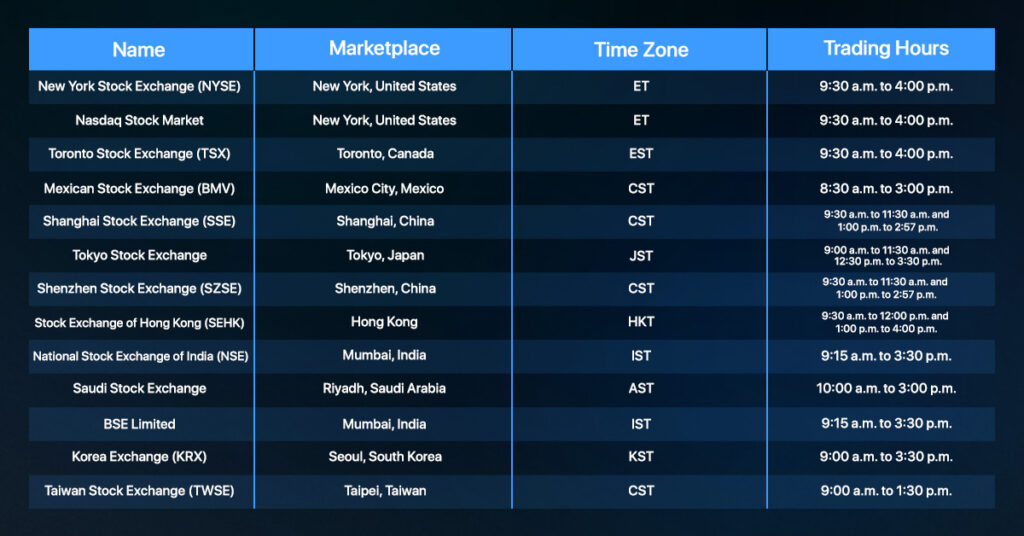
Credit: Investopedia
Pre Market and After Hour Market
As the name suggests, pre-marketing and post-marketing refer to trading that occurs outside the session schedule. Certain brokers offer extended hours for trading.
Day traders tend to avoid these periods, including those with short positions. There is little liquidity during this time, making it difficult to convert your positions to cash easily.
The main reason why these markets are included in this day trade for beginners guide is for the following:
- Enter positions in response to breaking news before the market opens.
- Remove or limit their market exposure if they have open positions to avoid losses.
- Edit their open positions when the market is closed, which involves changing the stop loss or limit order price points.
 Trading outside of market hours let you react to breaking news right away.
Assets and Instruments in Day Trade
For this part of our day traders for beginners guide, the various assets are discussed in detail. Knowing what you are buying and selling is integral to earning money from trading.
Assets
The market day traders participate in, focusing on a specific asset. Below are the common day trading markets:
- Stocks: Stocks are securities that give you partial ownership of the company. If you saw people in movies saying a company is going public, it means they are selling shares of their stock. Companies do this to raise capital for expansion plans.
- Forex: Forex or foreign exchange involves the trading of different currencies. Day traders participating in this market are taking advantage of economic or political news that affects a currency’s value.
- Commodities: Commodities involve a variety of goods being traded. Examples include energy resources like crude oil, natural gas, and gasoline. Gold, silver, and copper count as metal commodities.
- Cryptocurrencies: Cryptos are digital currencies that are used for real-world transactions. Exchanges allow for spot trading of known cryptocurrencies like Bitcoin and Ethereum. Some offer trading pairs with fiat.
Day Trading Instruments
Instruments are what day traders buy and sell in the market. All of them involve one or more assets discussed above. Below are the common instruments involved in day trading:
- Options: These are time-limited contracts that give you the right to buy or sell shares at your specified price. Note that this contract is merely a right, giving you the option not to buy or sell the asset before it expires.
- Futures: These are also contracts where both traders agree to buy or sell an asset at a specific price. Both you and another trader are obligated to buy or sell your asset at a future date.
- ETF: An exchange-traded fund (ETF) contains a bundle of securities that day traders can buy and sell. A good example is the Vanguard S&P 500 ETF that holds 500 assets from the largest US companies.
These are just a broader look at standard instruments in day trading. Certain assets have their own options, like forex futures and index options. To know which instruments are the best ones to trade, join our members’ subscription. We offer a lifetime access to a complete roadmap for beginners, and you join a community of new day traders looking to be financially independent at just 1 EUR!
Starting Up as a Day Trader
At this point in the day trading for beginners guide, you likely want to try your hand at making market predictions. We go through what you need to get started in this section.
Open a Trading Account
The first step to day trading is to find a brokerage and create an account. This is the most recommended step to give you a first-hand view of the various assets and instrument markets. Below are the top brokers for day trading (note that these are examples for illustrations, not endorsements):
- eToro: One of the most accessible broker platforms is eToro, which has more than 7,000 instruments you can trade. You can find stocks, cryptos, and other assets to trade here.
- NinjaTrader: When it comes to futures, day traders utilize NinjaTrader. Beginners are encouraged to join with their “no deposit minimum” benefit, allowing them to start trading with minimal capital.
- Charles Schwab: This is an American-based brokerage that offers trading of stocks, forex, cryptocurrencies, and various assets. The platform offers multiple tools, such as screeners and charting capabilities, to help advanced traders.
- Webull: From OTC stocks to Bitcoin ETFs, Webull lets you gain exposure to a wide range of markets. This is also one of the brokerages that enables you to trade during pre-market and post-market.
- TradeStation: One of the FINRA-regulated US stockbrokers, TradStation offers a user-friendly platform for day traders of various experience. They also have no minimum deposit and offer research resources that provide more information about the instruments being traded.
Keep in mind that you should only open an account with any online brokerage to see the market, not to jump straight in and participate yet.

Take Advantage of Demo Accounts
To get actual experience in trading with zero risks, you can sign up for a demo account in platforms like eToro. Demos give you a virtual portfolio or paper capital while utilizing live market prices. You can enter positions based on your analysis of the market or just simple guesses to see how real money is made trading assets. Brokers like IG let you simulate day trading with indices, forex, shares, and even commodities with virtual capital.
Make a Trade Journal
An important part of being a day trader is to have a journal to record every position you enter and exit. It also covers all the lessons you are about to learn, such as reading candlesticks, identifying price patterns, and using news to spot potential price movements.
Another important lesson to learn in our beginner’s day trading guide is to expect losses. All day traders lose money more than once. Even the most successful ones who make day-trading a full-time job saw their capital drop several times. The reason they are successful is that they learn from their losses and make money from insightful trading.
All day traders need a journal they can always access for a refresher on their lessons and to write about the outcomes of their trades. Consider using it when making positions with a demo account after going through TradingMMT beginner lessons. All virtual gains and losses are essential to helping you make actual money from day trading.
Final Word: Day Trading Beginner’s Guide
Thank you for going through our day trading for beginners’ guide. We only cover the bare essentials of day trading here, including the assets and instruments you trade. Continue reading our articles to further understand all aspects of day trading, including how to read candlesticks. If you are not yet a member, sign up for our TradingMMT Beginner membership for lifetime access to insightful content.
FAQ: Day Trading For Beginners
What is The Pattern Day Trader Rule?
Margin accounts that participate in four or more days of day trading within a five-business-day period will be tagged as day traders. As a day trader, you are subject to PDT restrictions, which require you to have at least 25,000 USD in equity. Equity is the value of your capital and current positions combined.
What if I cannot meet the PDT threshold?
There are less risky trading options if the 25,000 USD is too much, like futures micros and spot FX. You can also use demo accounts to make massive trades without investing a large amount of capital.
Are day-trading profits taxed across Europe?
Tax laws differ in various countries. For the UK, spread betting is tax-free. Profits from share and CFD trading are tax-free until you reach the annual allowance of £3,000 as per the Capital Gains Tax law.