
The reason why your entries don’t work is quite simple, but very overlooked.
I’ve lost the most money in my trading when trying to call a top in a bullish market or a bottom in a bearish market, trying to predict these reversals.
Yet, most traders do exactly that when looking for an entry, they’re trading a LTF potential reversal when the HTF is still retracing, so your entry just ends up being you calling a top or a bottom.
Going completely against the current momentum, this might work sometimes, but most of the time this just ends up being a loss and the worst of all is that often afterwards price still goes in your intended direction after taking you out.
Let’s fix it. To do this, let’s first understand momentum and where we want to get involved:
Where to get involved
The market moves in momentum phases; it has bullish momentum, bearish momentum, and consolidations (equal momentum).
In a perfect world, when we’re looking to buy, we ideally get involved when the bullish momentum is at its strongest, because that’s when the trades are most likely to play out almost immediately.
So to draw this out, below is an image of areas where we do want to get involved when buying and where we ideally don’t.
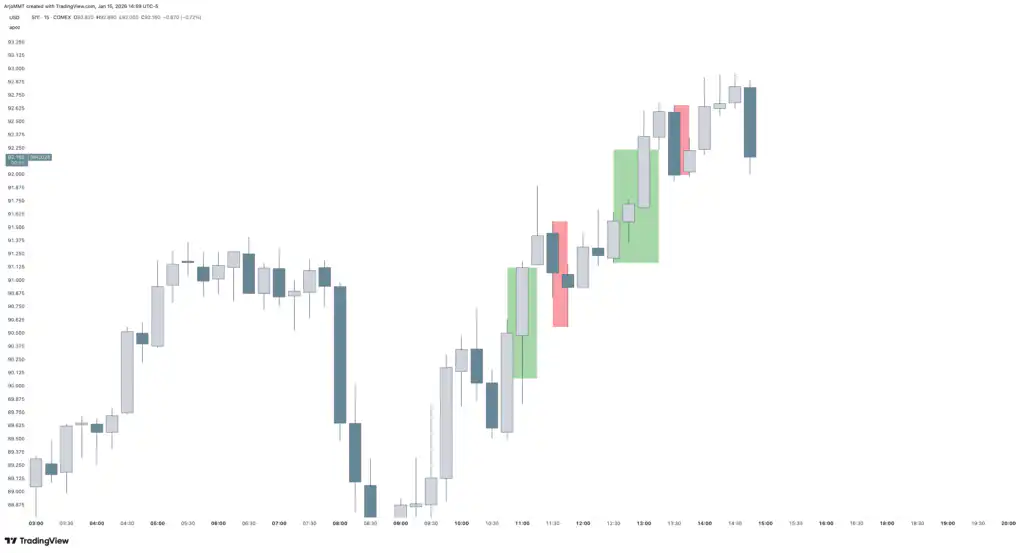
Essentially, buying alongside the momentum.
The reason why this is important is that if you’re buying whilst the momentum is bearish, the chance of your stop loss getting hit and the price later on still moving higher is high.
So, since we’re working with a stop loss (you should), timing plays a role.
Here’s the problem
This is where most get involved, when we create an HTF retracement back into any PD Array, then look for the first potential LTF reversal whilst the HTF is still retracing.
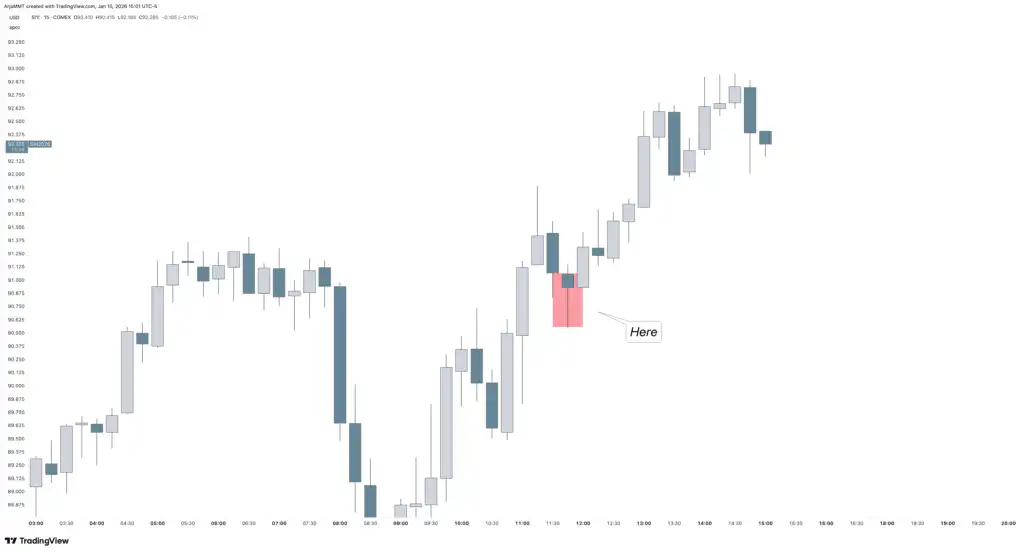
So inherently, you’re entering against the moment, that’s the problem.
Think of it like a car
When a car is driving fast, it doesn’t go from 100 to 0 in zero seconds. No, even with the best car in the world, there will be a delay.
Same for going from 0 to 100, there will be a delay. That’s just nature, that’s how momentum works.
The market is the same. We go down very fast, and we trade into a bullish FVG. We don’t immediately come to a stop and reverse; it takes time.
Price on the LTF will first consolidate a bit before coming to a full stop, then it will try to push higher, potentially having some liquidity sweeps to the downside, and only then will it finally pick up momentum and continue higher.
The problem is that most people expect it to come to a full stop, get involved in the consolidation, lose the trade, and see price run off without them.
What to do instead?
Inherently, it comes down to waiting for more confirmation, but let’s split it into 2 things:
- Wait for the resistance to be overtaken
Another reason why we consolidate is that we often run into, for example, a bearish FVG whilst we’re looking for bullish entry confirmation.
The bearish FVG disturbs the price just enough that we might continue lower for a bit more.
Waiting for it to be overtaken will get you cleaner entries.
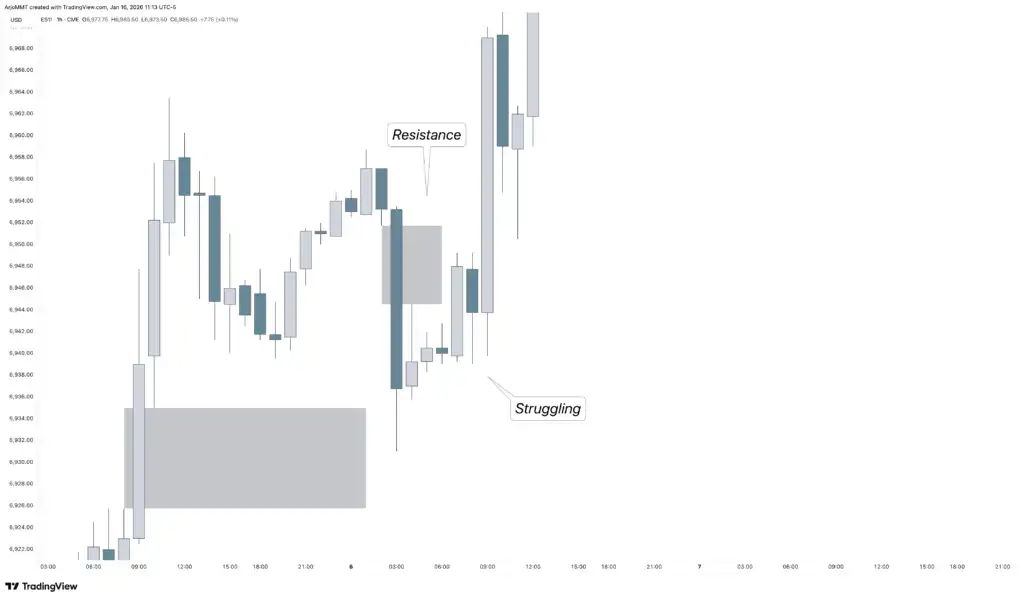
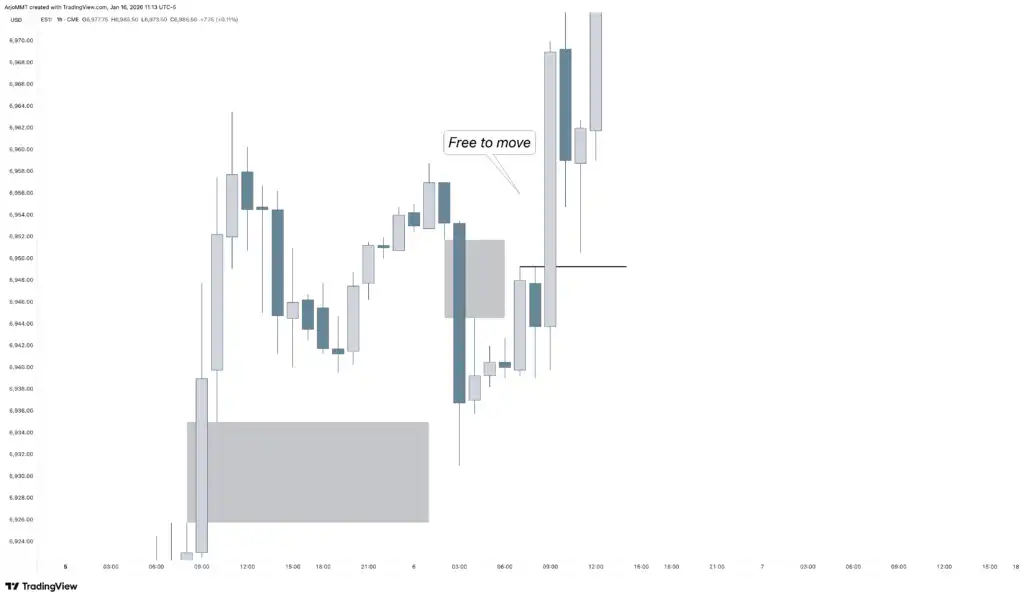
When the 2 Candle Rejection has been disrespected.
2. Enter on expansions
The most bullish momentum you can have is a bullish expansion candle. It’s a candle that has a body close above the Previous Candle High. Essentially the 2nd candle of an FVG.
I love those candles for my entries.
In the scenario above, that would look something like this:
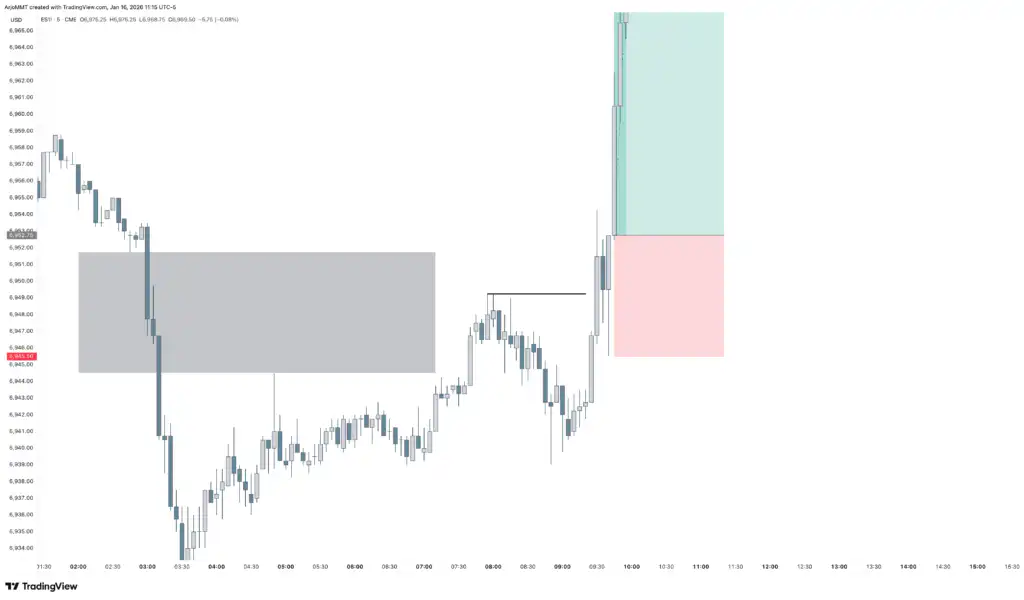
This is what we would call a 2-stings entry in the MMT.
Profiting from the bullish momentum and timing the entry nicely.
All we did was wait for the bullish momentum to take over again.
There are a lot of levels to understanding these things. In the MMT, we’ll take you to the next level.
Have a great day!
Arjo Janssens – MMT